
I spent years believing my mind was just built differently
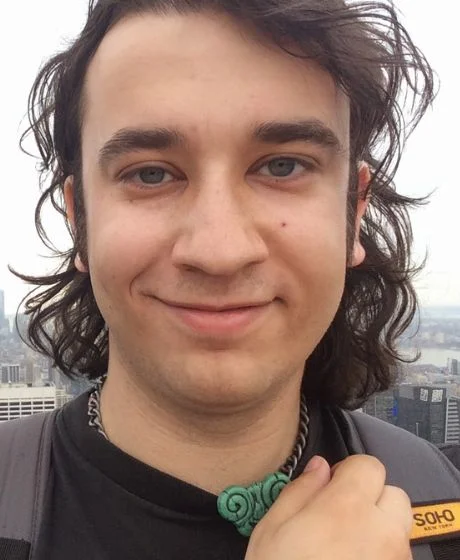
But not in the inspiring way people mean when they say that. By my late twenties I had two diagnoses: persistent depressive disorder and ADHD. Which may sound like useful information, but for me it mostly functioned as a full stop. This is what you are, get used to it.
So I did. I got used to it. Adjusted my expectations of life, built routines around the assumption that a certain level of fog, fatigue, and low mood was just my baseline. Some people had energy, motivation, happiness. I wasn't one of them.
The problem wasn't the diagnosis. It was what I did with it.
There's a concept in linguistics called the "is of identity." It's the difference between saying I am depressed and I have depression — or more usefully, I have a low mood. The first one turns a symptom into an identity. And the moment that happens, there's nothing left to examine.
The shift
If I am a depressed person, there's nothing to examine. If I have a low mood today, I can ask: what's underneath that? Sleep? Diet? Unprocessed stress? A pattern that can be understood and potentially changed?
That reframe was the thing that got me unstuck. Not immediately. But it opened doors that my diagnoses had quietly closed. I found biohacking; people like Dave Asprey, Ben Greenfield, eventually Eric Edmeades and WILDFIT. What they shared was a different premise: that the body and brain are responsive systems, not fixed states. That symptoms have upstream causes. That you are not your baseline.
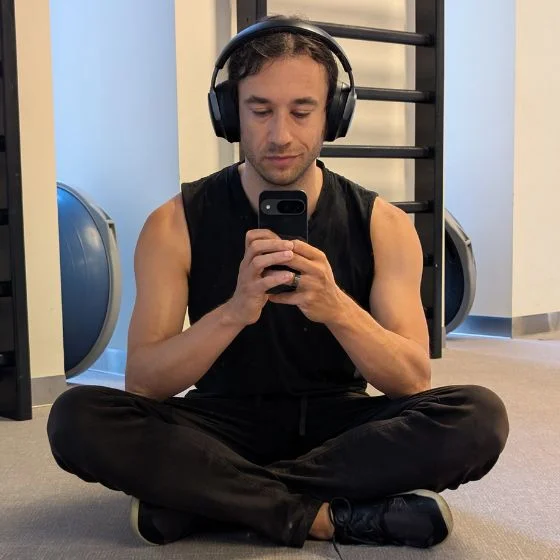
The food piece
Things were improving, but not reliably. My mood, energy, and focus were all cycling between low and acceptable. Something else was still stuck.
What WILDFIT showed me was why certain behaviors are so hard to change. Most food patterns aren't about physical needs or choice alone — they're subconscious, reinforced over years, and the pull toward them doesn't respond well to limitation or willpower.
When I stopped fighting it the way I had been and I understood what was actually driving the subconscious behavior, my choices and patterns started to shift on their own. The weight started moving. The cycling settled. Things that had been fluctuating for years landed and I felt better than I had in decades before.

The Work
That's the work I do with clients now
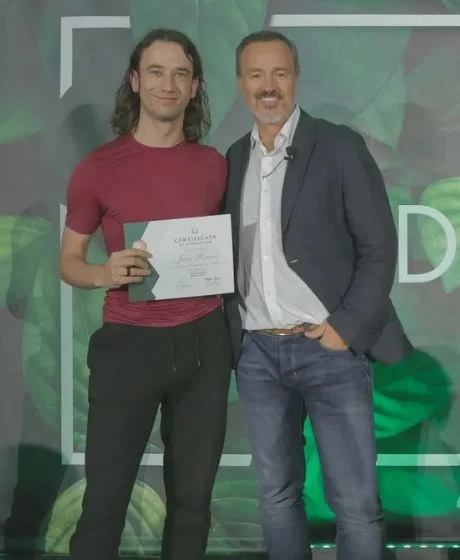
I'm a certified WILDFIT, Holobody, and 10X coach, based in Tallinn, Estonia.
Most people who find me have already done the obvious things. Eaten better, exercised, seen a doctor. They're still tired, still carrying weight they can't shift, still not where they expected to be after all that effort.
The missing piece is almost never more effort. It's usually that nobody explained why the patterns work the way they do — why certain cravings are so persistent, why healthy habits are so hard to build, and why most approaches eventually fall apart.
Once that makes sense, what looked like a willpower problem starts looking like a knowledge gap.
That's a different problem to solve.
Ready to explore what's possible?
Book a free Discovery Call — we'll chat about where you're at, what's getting in the way, and whether working together makes sense.
Book a free Discovery Call